A Hotbed of Change: Asia’s Shifting Economic Landscape

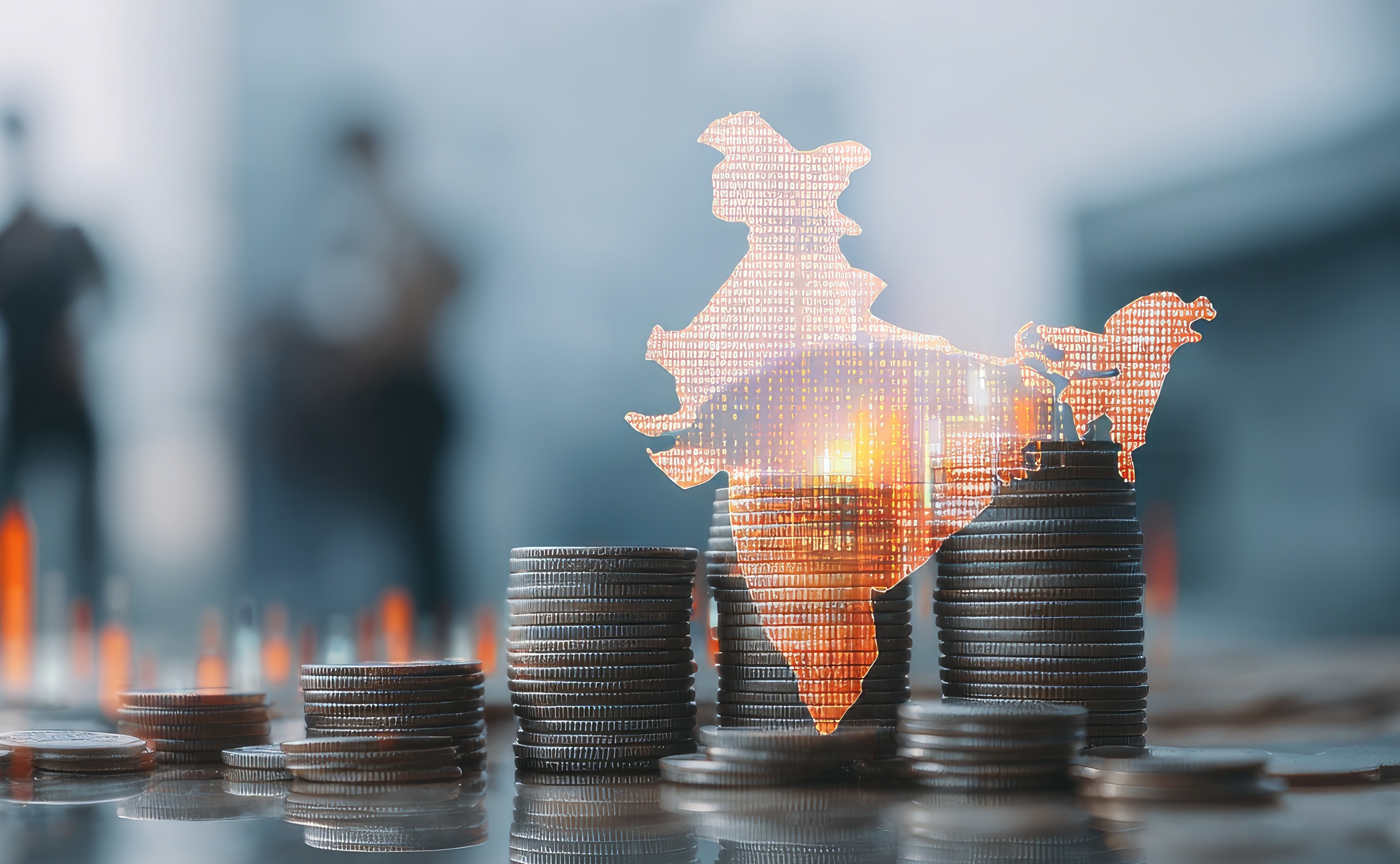
Asia is rapidly transforming into a hub of innovation, wealth creation and opportunity. Citi Institute recently sat down with Jan Metzger, Co-Head of Japan, Asia North, Australia and Asia South Investment Banking, to discuss the key trends shaping the region and what they mean for global markets.
HIGHLIGHTS
- Asia is transforming from a "Made in Asia" model to a "Designed and Innovated in Asia" hub, driven by a growing middle-class, entrepreneurial activity and technological advancement
- The region is seeing significant market achievements, including corporate governance reforms in Japan, high-tech leadership in China and Taiwan and a booming IPO market in India
- Despite challenges like trade tariffs and the impact of AI on employment, Asian governments are proactively fostering high-tech economies to compete in the new global paradigm
There’s a lot of buzz about Asia’s growth. What are the main drivers behind this transformation?
It’s a multi-faceted story. First, the sheer scale of growth is staggering. Asia is set to outgrow the rest of the world, not least because 80% of the next billion middle-class consumers will be in this region1. This creates a massive internal market that is attracting multinational corporations from across the globe. This demographic shift, coupled with a surge in entrepreneurial activity, is fundamentally altering the global economic structure.
But the more profound shift is in the nature of this growth. We’re moving from a “Made in Asia” to a “Designed and Innovated in Asia” model. The region has become a hotbed of entrepreneurialism and technological advancement. This is reflected in the fact that about 40% of the Fortune Global 500 (the world’s largest companies by revenue) are based in Asia2.
The consensus [in Asia] seems to be that [the AI] trend is unstoppable, and the only way to manage it is to embrace it and try to stay ahead of the curve.
Can you give us some specific stand-out achievements at the market level?
Absolutely. In Japan, we're seeing a wave of corporate governance reforms, including new corporate governance and investors stewardship codes. These reforms have combined to help stimulate M&A activity to a 30-year high in 2025, with announced volumes up 85% year-on-year to $355 billion, according to December data from Dealogic.
China is becoming a formidable competitor in high-tech sectors like electric vehicles and alternative energy, and is making significant strides in artificial intelligence. Meanwhile, Taiwan is at the heart of the AI revolution, manufacturing the critical components that power this technology, leading to large trade surplus.
India is likely to be one of the world’s most active equity capital markets next year, with IPOs expected to raise between $15-20 billion in 20263.
At the same time, Asian corporates are significantly increasing their investment in the U.S. Japanese, South Korean and Taiwanese companies, in particular, have been putting a lot of greenfield money into future-shaping industries such as semiconductors, electric vehicle (EV) battery manufacturing, and AI infrastructure. Recent foreign direct investment (FDI) data backs up the trend: In 2024, the Asia-Pacific region was the second-largest source of new investment in the U.S. with over $1 trillion, influenced by U.S. policies like the CHIPS and Science Act4.
With all this growth, are there any significant headwinds or challenges that could derail this progress?
There are two major challenges to be aware of. The first is the ongoing issue of trade tariffs. While many companies have found ways to mitigate their direct impact through export exclusions and transshipment, the broader effect has been to force a rethink of global supply chains.
The second, and perhaps more profound, challenge is the rapid advancement of artificial intelligence. While AI is a huge driver of growth, there's a real risk that it could eliminate the low-end manufacturing jobs that have traditionally been the ladder out of poverty for developing nations. If robots can pluck rubber from trees, what happens to the villagers who used to do that work? It's a question that governments across the region are grappling with.
How are governments in Asia responding to this AI challenge?
The consensus seems to be that this trend is unstoppable, and the only way to manage it is to embrace it and try to stay ahead of the curve. We're seeing this in the pro-innovation policies being pursued in China and India, and in Indonesia's focus on building out its data center infrastructure. The goal is to create more nimble, high-tech economies that can compete in this new paradigm.
What about the “China plus one” strategy that we've heard so much about? Is that still the dominant approach among manufacturers?
The “China plus one”" strategy has evolved into something much more complex. With the proliferation of tariffs, it's no longer just about having one alternative to China; it's more like “China plus 15, 20 or even 30”. Companies are building much more diverse and flexible supply chains to navigate the new realities of global trade.
However, it’s important to remember that China will always be a critical part of the equation. It’s not just a major exporter – it’s also a massive end market that no global company can afford to ignore.
What do all these trends—the growth, the innovation, the challenges—mean for global banks and financial institutions?
It means that Asia is an incredibly attractive and dynamic place to be. The region is seeing a wave of new companies emerge and grow at pace. This creates an opportunity for those financial institutions that can get in on the ground floor and support companies as they scale.
Of course, it’s also a highly competitive environment, with strong local and regional banks vying for a piece of the pie. And the regulatory landscape is just as complex as in the U.S. or Europe. But for those who can navigate these challenges, the opportunities are huge.
1Brookings Institute, The Unprecedented Expansion of the Global Middle Class, 201, global_20170228_global-middle-class.pdf
2https://fortune.com/companies/? itm_source=fortune&itm_medium=ranking_tout&itm_campaign=g500
3https://www.samco.in/knowledge-center/articles/indias-2026-ipo-outlook-20-billion-pipeline-signals-strong-market-momentum/
4https://www.bea.gov/data/intl-trade-investment/direct-investment-country-and-industry